FREE ENGLAND & WALES DELIVERY ON ORDERS OVER £50

Golf swing trainer

Golf Swing Speed Training: Add Distance the Right Way

Swing speed training teaches your body to move the club faster using lighter and heavier training sticks. Swing something lighter than your driver at full effort and your brain learns a new top speed; swing something heavier and your body builds the strength to hold onto it.

You need a proper golf swing trainer, a plan you'll stick to, and about 15 minutes, three times a week. For the full breakdown, read our guide on how to increase golf swing speed.

Swing Acceleration Stick £69.00 Free England & Wales delivery

  • Printed 6-week programme in the box
  • Designed by a PGA Professional
  • 12-month warranty
Swing Acceleration Stick

Choose your trainer

Start with the stick. Add the monitor if you want to see the numbers move.

Start here
Swing Acceleration Stick

Swing Acceleration Stick

£69.00

The three-stage speed trainer, with the printed 6-week programme in the box. Everything you need to start overspeed training.

More about the stick

One detachable stick covers all three stages, from light to full load, and packs down into a kit bag. Lost a weight or want a spare set for the bag? See the Spare Weight Set (50g + 35g).

Free England & Wales delivery

Train and measure
Strikely Speed Training & Launch Monitor Bundle

Strikely Speed Training & Launch Monitor Bundle

£199.99£19.00 less than buying both separately

The stick and the SPG Portable Launch Monitor together. Train the speed, then see whether it moved.

Free England & Wales delivery

Measure it
SPG portable launch monitor

SPG portable launch monitor

£149.99

Club speed, ball speed, smash factor, carry and total distance. Take a baseline before week one.

Free England & Wales delivery

How the three stages work

Overspeed training rests on a simple idea: your nervous system limits how fast you're willing to swing, and that limit can be retrained. Swinging a lighter stick at maximum intent resets what "full speed" feels like. Swinging a heavier stick then loads the same movement, so the new speed comes with strength and control behind it.

Stage 1: Light

The lightest configuration. This is where you groove rhythm, balance and pure acceleration. Because the stick is lighter than a club, you can swing flat out without your usual braking instincts kicking in. Most golfers are surprised how aggressive a "smooth" swing can feel at this stage.

Stage 2: Medium

Add weight and the stick starts asking questions of your sequencing. Stage 2 is about keeping the same free-flowing speed from Stage 1 while your body works harder to stay in balance. It trains stability and the ground-up chain (legs, hips, torso, arms) that actually produces speed.

Stage 3: Full

The full training load and the maximum stimulus. Stage 3 builds the strength to support your new speed, so it transfers to the course rather than staying a range trick. Because the stages detach, you switch loads in seconds mid-session.

Wondering what your current speed means for distance? Our golf swing speed chart shows typical clubhead speeds by age, gender and handicap, so you can see where you stand before you start.

What's in the free 6-week programme

Every Swing Acceleration Stick ships with a printed 6-Week Training Programme in the box. No PDFs to hunt down, no app subscription. Open the box, read the card, start swinging.

We wrote it this way because training aids without a plan end up in the garage by week two. A fixed six-week structure gives you a start line, a finish line, and a reason to pick the stick up on a wet Tuesday in February.

Three short sessions a week

Each one fits comfortably into a spare 15 minutes at home or before a range session.

A progressive path through the stages

You build up gradually across the six weeks instead of jumping straight to the heaviest load on day one.

Full effort, low volume

Speed training works on intent, not exhaustion. The sessions are designed to end before quality drops off.

In the box: the Swing Acceleration Stick (3 stages), the printed 6-week programme and a 12-month warranty.

Who made it

Designed by a PGA Professional

Strikely Performance Golf is run by two brothers who have spent their lives in the game. The Swing Acceleration Stick and its programme were designed by people who coach real golfers, not by a marketing team who found a factory listing.

That matters for a speed trainer, because speed work done badly just makes your bad habits faster. The three-stage progression and the 6-week programme exist so that the speed you gain is built on rhythm, sequencing and balance, the same things a good coach would work on with you in person.

Read our story
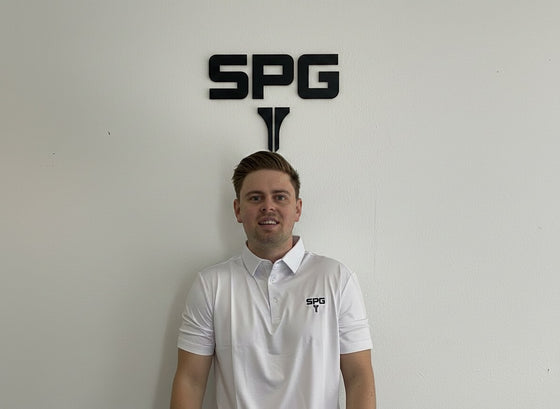
Harrison, PGA Professional & Co-Founder
Harrison PGA Professional & Co-FounderBSc Applied Golf Management, University of Birmingham
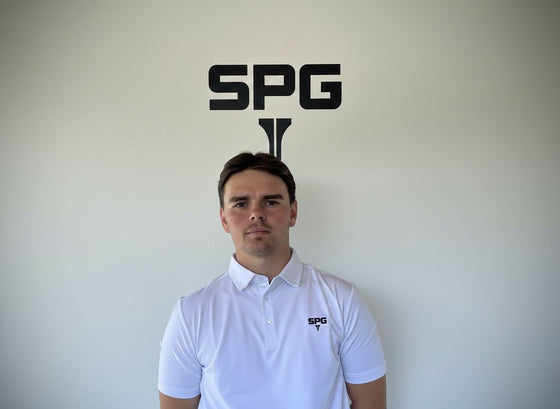
Pierce, Co-Founder
Pierce Co-FounderTrained at Essex Golf College
Swing Acceleration Stick
Swing Acceleration Stick · £69.00
SPG portable launch monitor
SPG portable launch monitor · £149.99

Measure it

Train it, then prove it moved.

Once you've put the work in, you'll want to see it. The SPG Portable Launch Monitor reads club speed, ball speed, smash factor, carry and total distance, and the bundle puts it in the box with the stick.

£199.99£19.00 less than buying both separately

See the bundle

Frequently asked questions

Do golf swing trainers actually work?

Yes, when they're used consistently and with a plan. Overspeed and weighted-stick training is one of the most widely adopted speed methods in golf, used by coaches and tour players alike, because it targets the thing that most directly controls distance: clubhead speed. In MyGolfSpy's independent long-term test, golfers gained 5.5–8.8% of clubhead speed over 12–14 weeks of overspeed training, and vendor-published six-week studies report gains in the region of 5–6 mph. The honest caveat is that no stick works from the shelf. Three short sessions a week for six weeks will do far more than one enthusiastic hour a month.

What is the best swing trainer for golf?

It depends on what you're trying to fix. For tempo, weighted trainers help; for path and face control, alignment and impact tools do a job. If your goal is more clubhead speed and distance, a progressive overspeed trainer is the right category, and we'd argue a three-stage tool with a structured programme beats a single fixed-weight stick, because the progression is what drives adaptation. That's exactly why we built the Swing Acceleration Stick the way we did.

What swing trainer does Rory McIlroy use?

We won't pretend to know what's in Rory's bag this week, and we'd be wary of any brand that claims a tour endorsement it doesn't have. What we can say is that overspeed-style weighted and light training sticks are widely used across professional tours as part of speed and warm-up work. The method matters more than the logo on the stick.

How long until I see results?

Our programme runs for six weeks, and that's the timeframe we'd ask you to commit to before judging it. Speed feel often changes within the first couple of weeks of overspeed work, but holding a genuinely faster swing under pressure on the course takes the full block of progressive training. Measure your baseline before you start (a launch monitor session or our swing speed chart helps) so you're comparing numbers, not memories.

Is swing speed training safe?

For most healthy golfers, yes, provided you treat it like any other physical training. Warm up properly before every session, start at Stage 1 rather than jumping straight to the full load, and follow the progressive structure in the 6-week programme rather than adding extra volume. Stop if anything hurts. If you have an existing injury or health condition, check with a medical professional before starting any new training programme. Speed work rewards patience; rushing it is how people get sore.